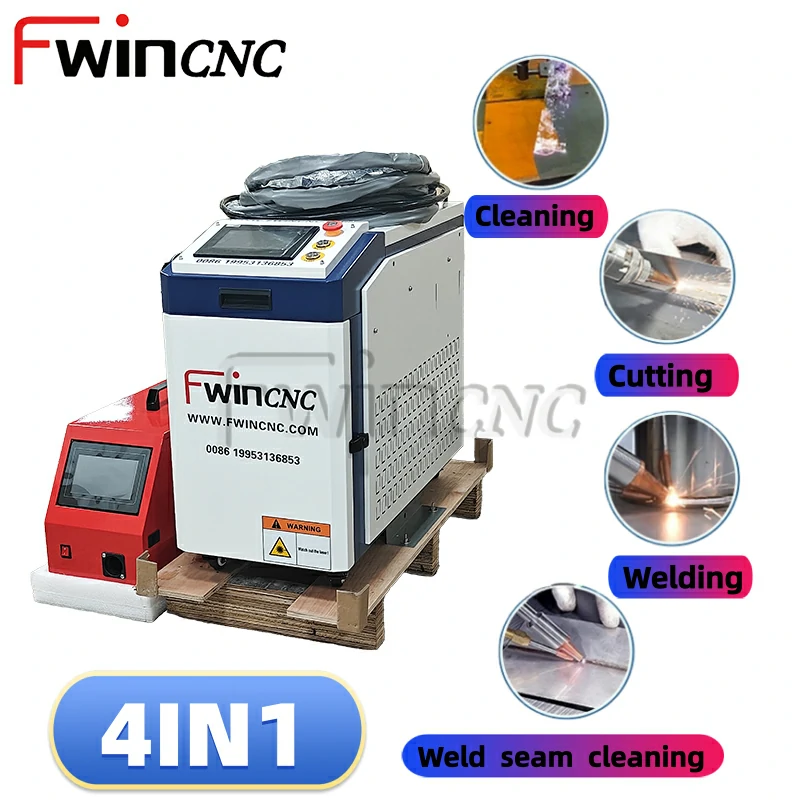
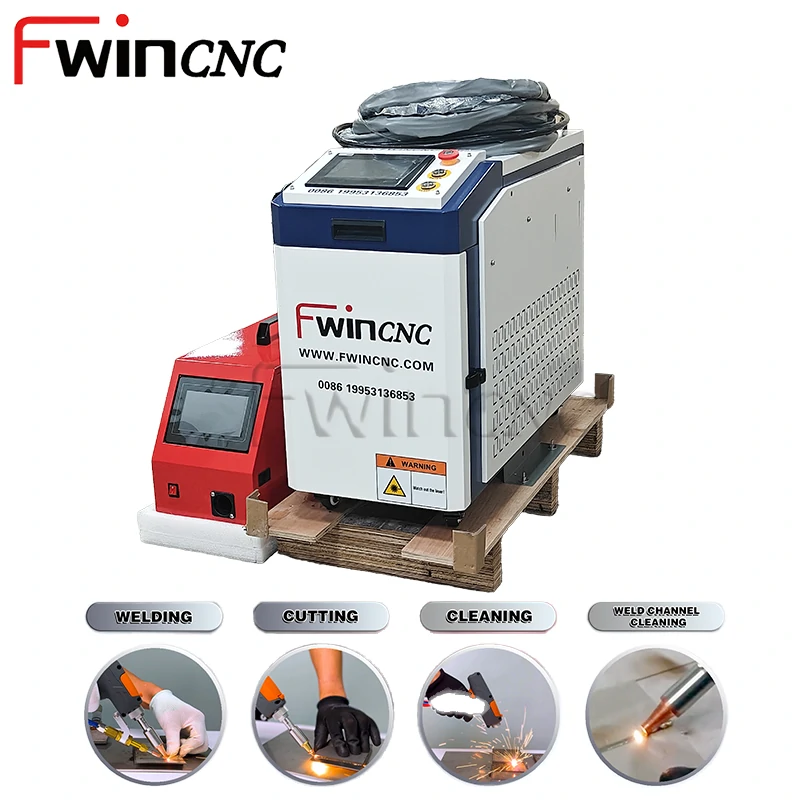
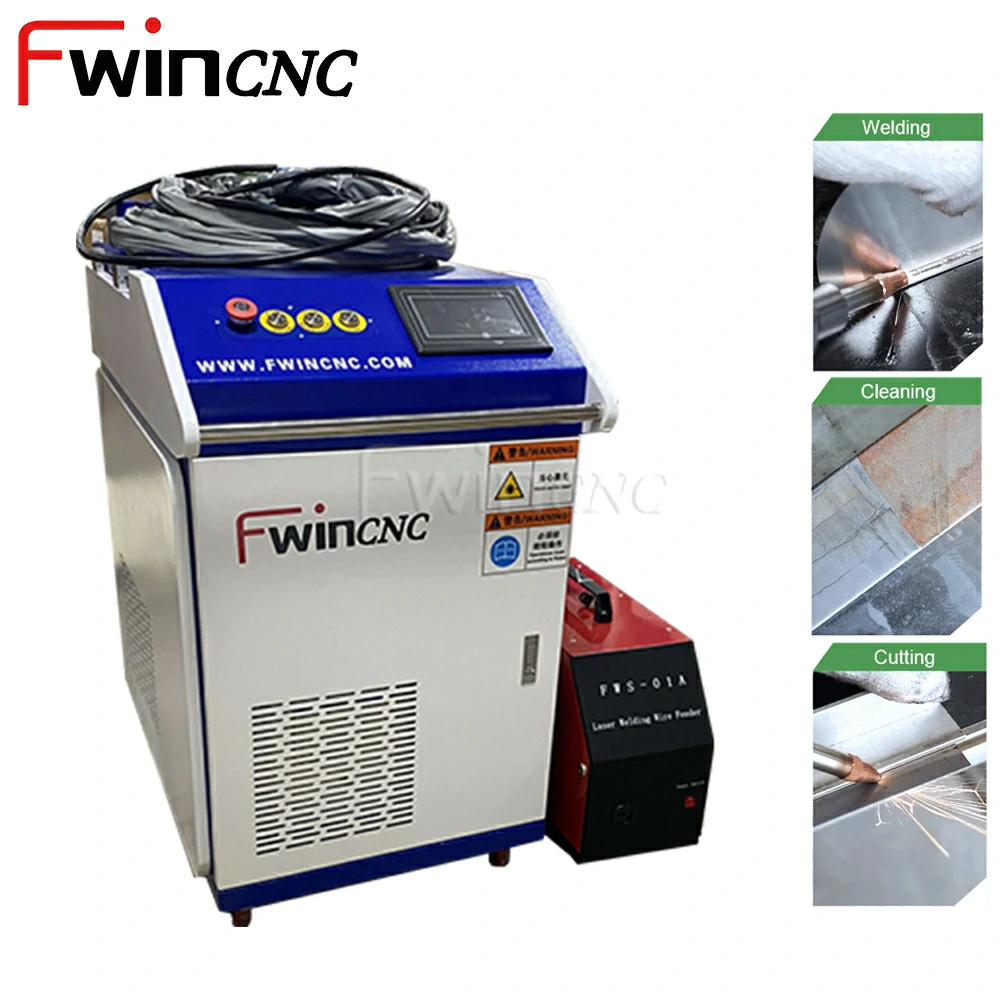
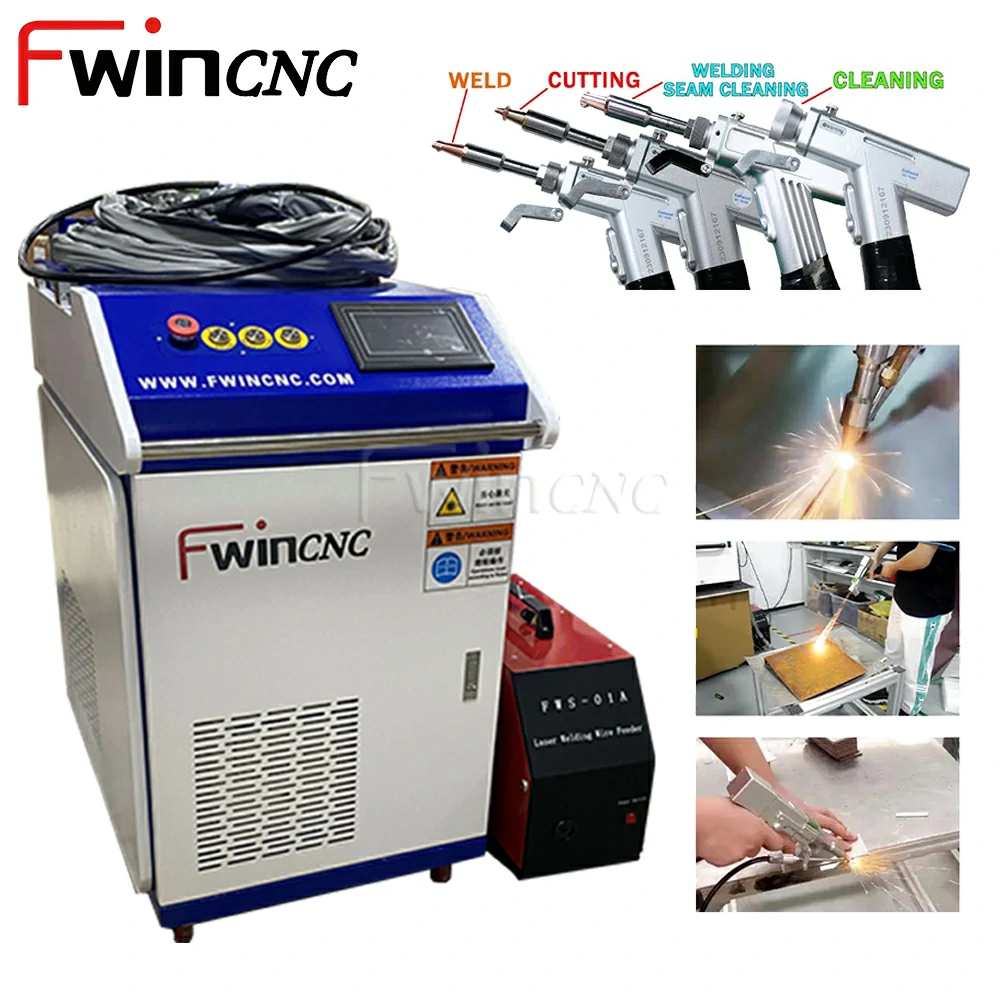
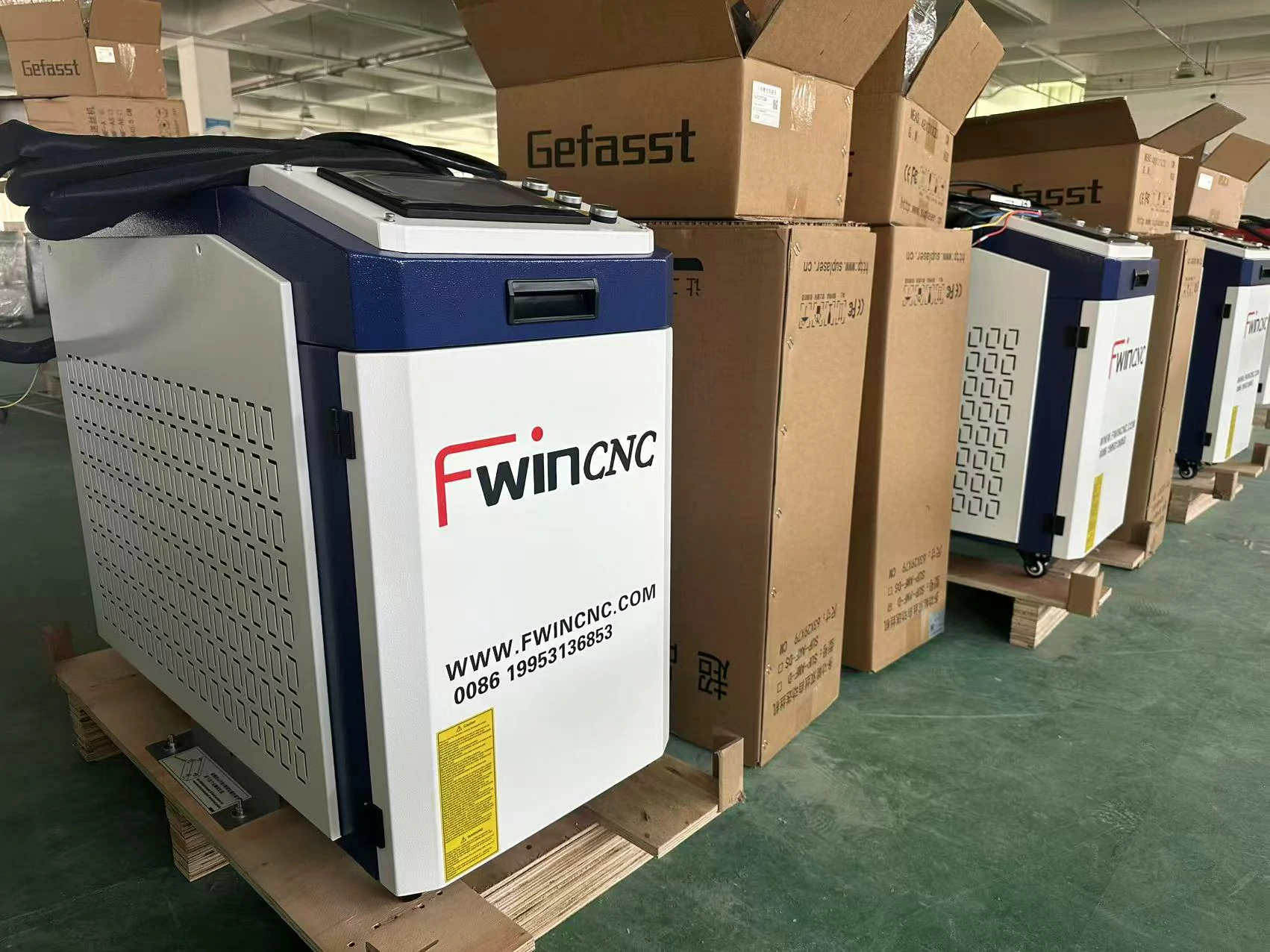
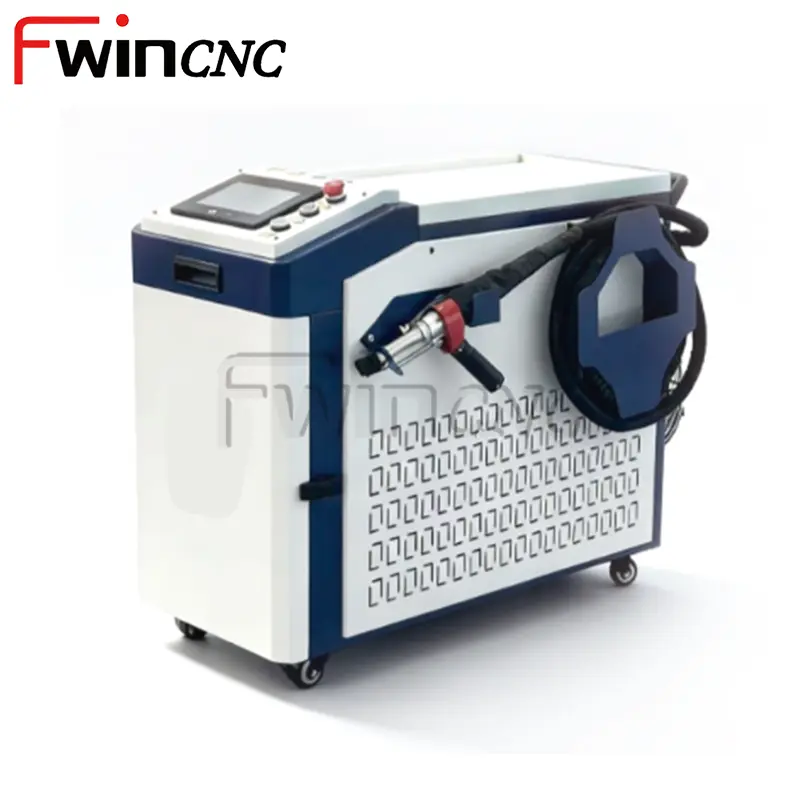
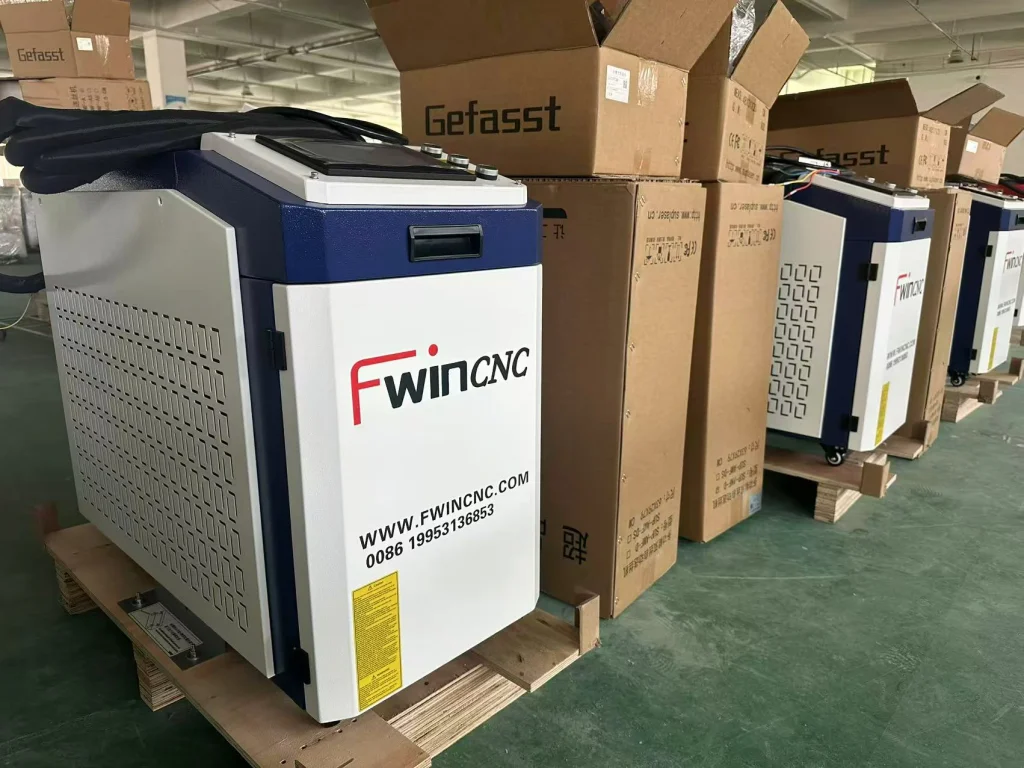
The Handheld Laser Welding Machine from FWINCNC is designed for manufacturers, metal fabrication workshops, industrial equipment suppliers, and other B2B buyers seeking a flexible solution for metal joining and surface processing. Available in 1500W, 2000W, and 3000W configurations, this multifunctional fiber laser system combines welding, thin-sheet cutting, rust removal, and weld seam cleaning in one workstation. By consolidating several metalworking operations into a single machine, businesses can simplify equipment management, improve workflow flexibility, and make better use of available workshop space.
Unlike equipment dedicated to a single processing task, this 4-in-1 laser system supports a broader range of production and maintenance requirements. Its handheld laser gun allows operators to work with different component shapes and joint configurations, while the touchscreen interface provides access to the machine’s processing modes. The appropriate configuration depends on the material, thickness, joint design, surface condition, and required production output.
4-in-1 Handheld Laser Welding Machine for Multiple Processes
1. Metal Welding for Everyday Production
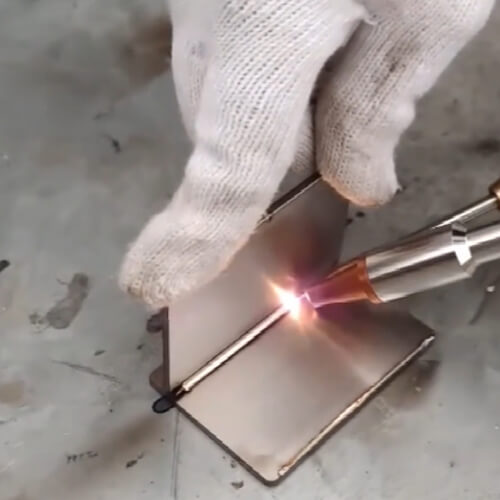
The primary function of this handheld laser welding equipment is joining compatible metal components with a focused laser beam. It is suitable for applications such as stainless steel fabrication, metal cabinets, sheet metal assemblies, kitchen equipment, and general industrial components. The process can produce neat welds with limited spatter when material preparation and welding parameters are properly controlled.
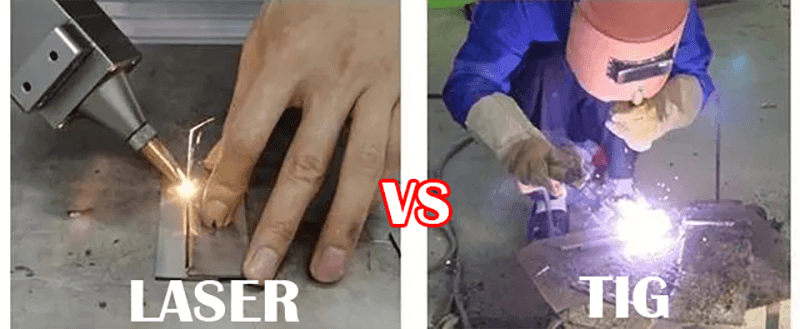
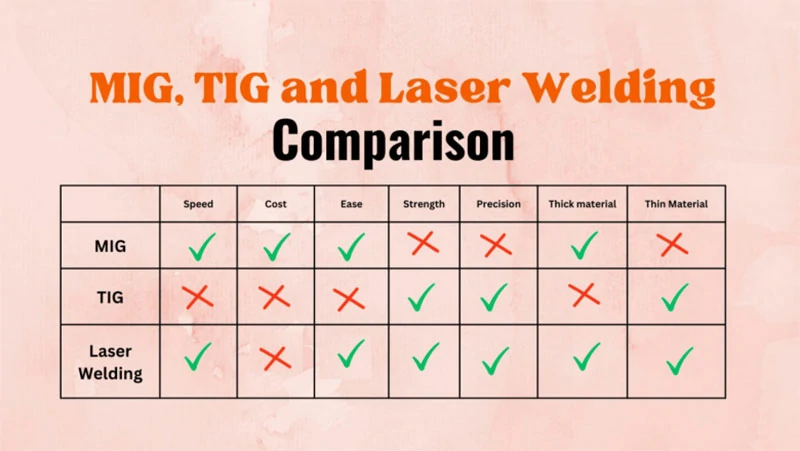
Compared with conventional welding methods, laser welding can reduce the amount of post-weld grinding and finishing required for suitable applications. This helps manufacturers improve the consistency of visible joints, shorten certain production steps, and reduce rework. Actual weld quality depends on material compatibility, joint preparation, laser power, travel speed, shielding gas, and operator skill.
2. Thin-Sheet Metal Cutting
The integrated cutting function provides additional flexibility for suitable thin-metal processing tasks. Workshops can use the machine for small component modifications, light fabrication work, and selected cutting operations without immediately switching to separate equipment.
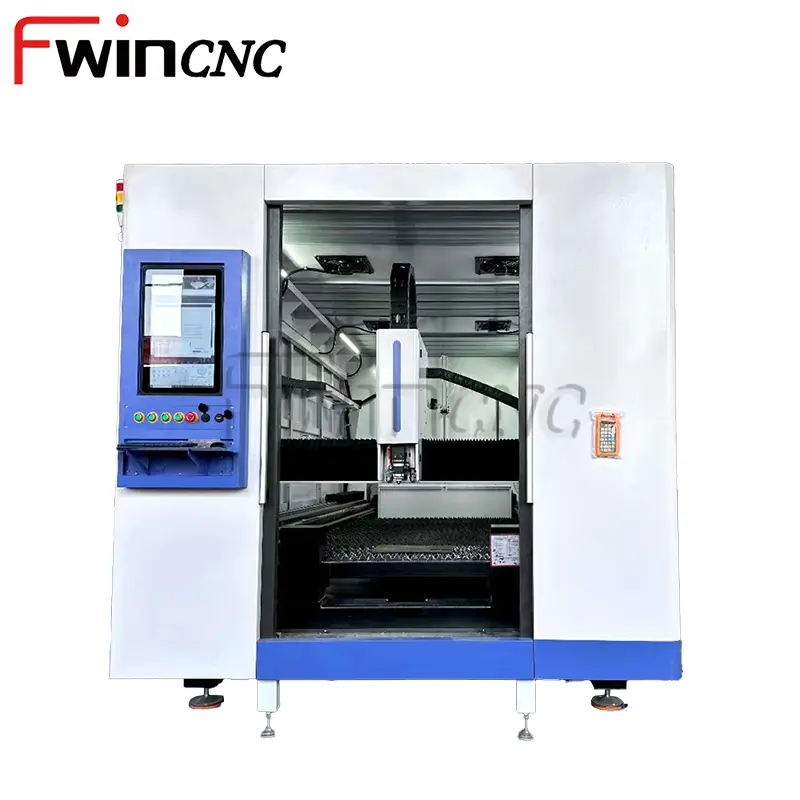
Cutting performance depends on the selected laser power, metal type, thickness, geometry, and process settings. Buyers should provide their material and thickness requirements when requesting a quotation so that FWINCNC can assess whether the proposed configuration meets their production needs. For frequent cutting of thick plates or high-volume precision cutting, a dedicated laser cutting machine may be a more appropriate solution.
3. Rust Removal and Surface Cleaning
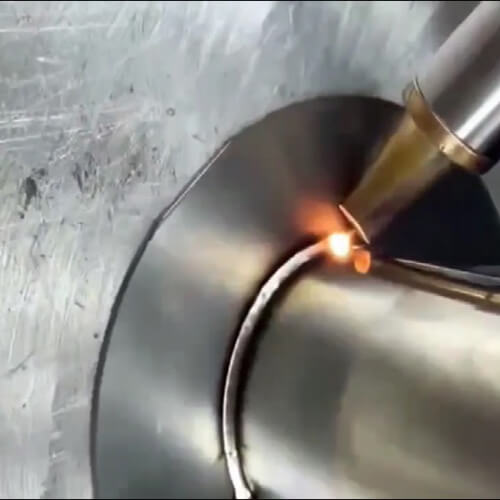
The handheld laser cleaning function supports the removal of rust, oxidation, paint, and other surface contaminants from compatible substrates. It can help prepare metal surfaces before fabrication, maintenance, or refinishing. By adjusting the process to the surface condition, operators can perform targeted cleaning without relying exclusively on abrasive tools or chemical cleaning methods.
This function is particularly useful for metal repair workshops, equipment maintenance departments, and manufacturers handling components that require surface preparation. Cleaning results vary according to the coating, substrate, contamination level, and selected parameters. Before processing valuable or sensitive parts, users should verify the cleaning settings on a test area.
4. Weld Seam Cleaning and Finishing
After welding, visible seams may require cleaning to improve appearance and prepare the component for subsequent finishing. The integrated weld seam cleaning function helps address oxidation and discoloration on suitable metal surfaces. Combining welding and post-weld cleaning in one workstation can reduce the need to move parts between separate processing stations.
For manufacturers producing stainless steel fixtures, enclosures, furniture, and architectural metal components, this integrated workflow can help simplify handling and improve finishing efficiency. The required level of cleaning depends on the material, weld condition, surface finish, and final product specifications.
Flexible Power Options for Industrial Buyers
FWINCNC offers 1500W, 2000W, and 3000W versions to accommodate different workshop requirements. A lower-power configuration may be appropriate for selected light fabrication and general welding tasks, while higher-power options may support more demanding applications when material and process conditions permit.
The machine is equipped with a touchscreen control panel supporting multiple languages and welding, cleaning, and cutting modes. A wire feeder is included, with listed wire sizes of 0.8, 1.0, 1.2, 1.6, and 2.0 mm. The listed laser wavelength is 1080 nm, and the fiber cable length is 10 m.
The water-cooling configuration varies by power level. The listed 1500W and 2000W versions use a 10L industrial cooling system, while the 3000W version uses a 16L system. Electrical requirements also differ between configurations, so buyers should confirm local voltage, phase, frequency, and installation conditions before ordering.
Improve Workshop Efficiency and Equipment Utilization
For a business purchasing metal fabrication equipment, the value of a multifunctional laser system extends beyond its initial purchase price. Combining several compatible processes can reduce the need for separate workstations, simplify operator movement, and make it easier to allocate production space. It may also reduce workpiece transfers between welding, cleaning, and finishing operations.
The benefits are most relevant to workshops that handle varied orders, short production runs, customized metal products, or repair work. Instead of investing immediately in several specialized machines, buyers can evaluate whether an integrated system meets a sufficient proportion of their daily workload.
To estimate the potential return on investment, compare the machine’s purchase and operating costs with current labor hours, finishing time, consumable use, production volume, and maintenance requirements. FWINCNC can assess the proposed configuration against your application details to help establish a more practical equipment specification.