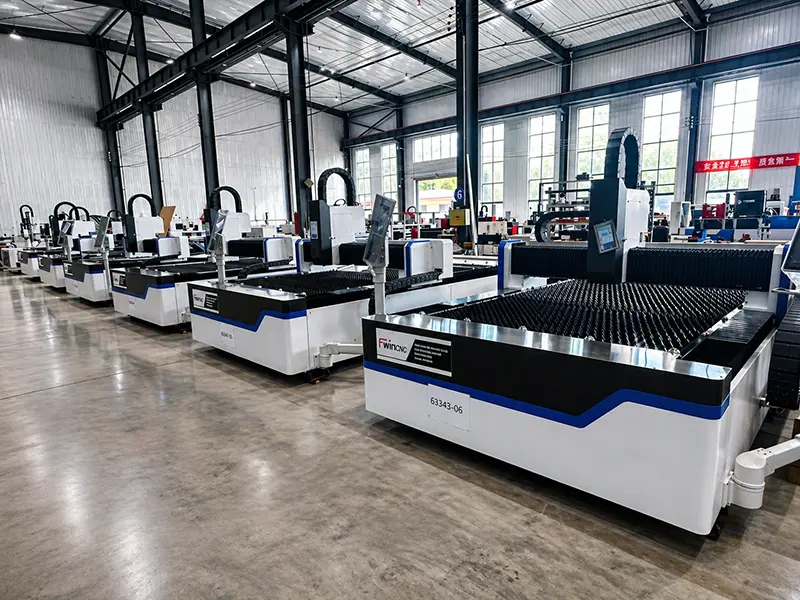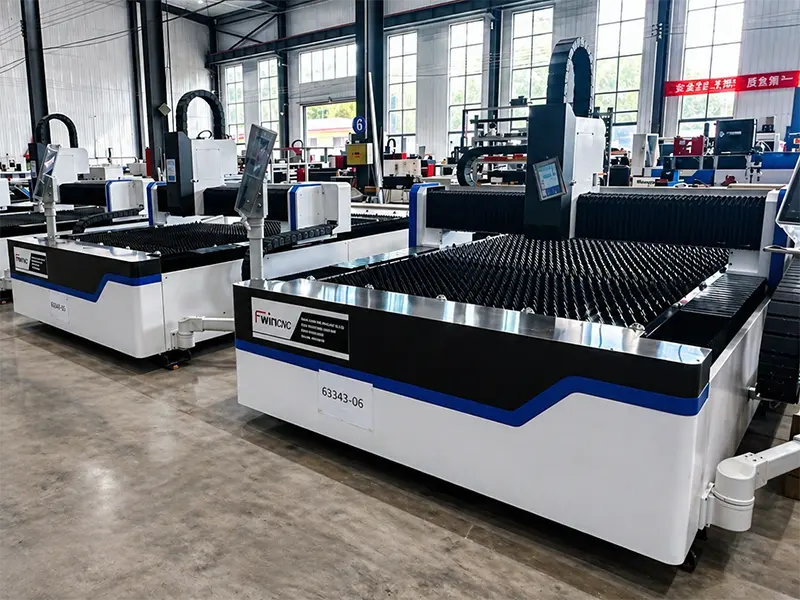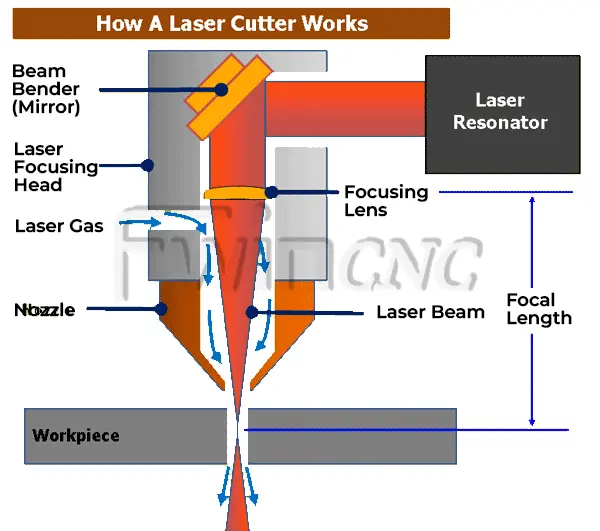
When you look at modern metal fabrication, the traditional mechanical saws and drills of the past are rapidly being replaced by concentrated light. Laser cutting machines have shifted from a futuristic novelty into an absolute necessity for sheet metal workshops worldwide. At Jinan Allwin CNC Machinery Co., Ltd. (Fwincnc), we believe that understanding the core principles behind these high-tech systems is the first step toward unlocking their manufacturing potential.
1. What is a Laser Cutting Machine and How Does It Work?
At its simplest, a laser cutting machine is a computer-controlled system that uses an ultra-focused, high-power light beam to melt, vaporize, or burn through materials—most commonly sheet metal, pipes, and structural plates.
The word “LASER” stands for Light Amplification by Stimulated Emission of Radiation. Instead of a physical blade that dulls over time, a laser cutter uses energy.
[Laser Source Generates Light] -> [Fiber Optic Cable Transports Light] -> [Cutting Head Focuses Beam] -> [Material Vaporizes]
The process begins inside the laser generator (source), which excites atoms to release light particles. This light is bundled together and channeled through a flexible fiber optic cable into the cutting head. Inside the head, high-precision glass lenses squeeze the broad light beam down into a single focal point that is thinner than a human hair. The sheer energy concentration at this point instantly melts the metal, while a blast of compressed gas blows the molten puddle away to create a clean slot (called the kerf).
2. The Three Core Pillars of a Laser Cutting System
Every standard CNC laser cutting machine relies on three primary systems working in perfect synchronization:
-
The Laser Source: This is the engine of the machine. It dictates the wattage (ranging from 1000 Watts to over 30000 Watts) and determines exactly how thick the machine can cut. Higher wattage means faster cutting speeds and thicker material capacity.
-
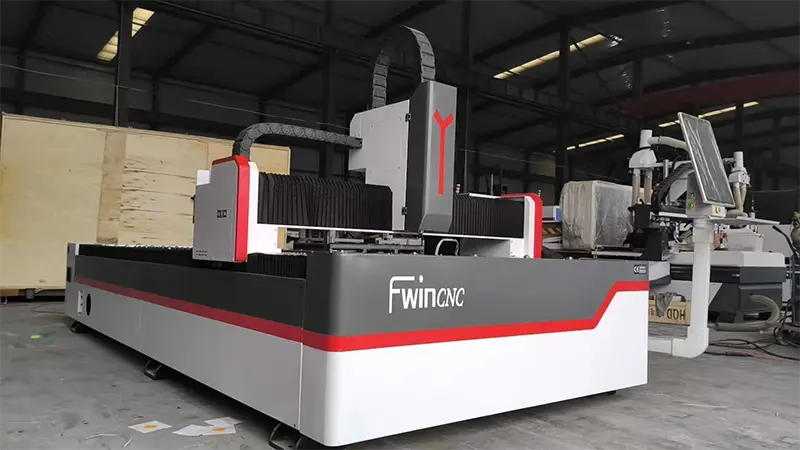
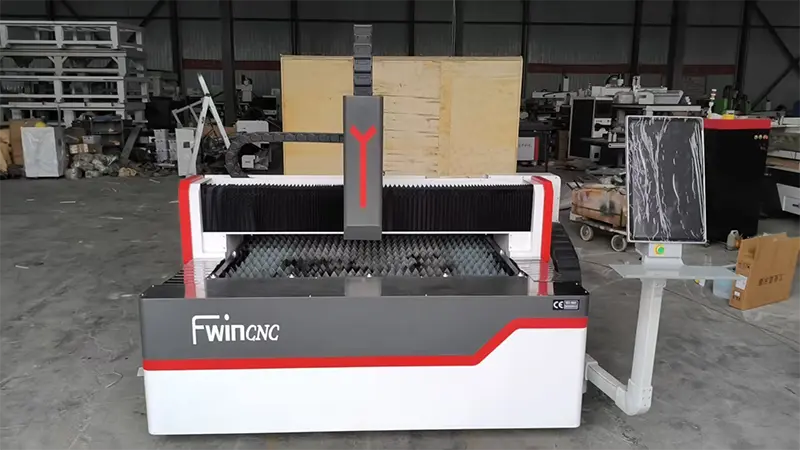
The CNC Machine Body and Bed: The Computer Numerical Control (CNC) bed acts as the structural foundation. It uses high-speed servo motors and gear systems to move the cutting head precisely along the X, Y, and Z axes according to a digital design file.
-
The Assist Gas System: Laser cutting cannot happen with light alone. The machine uses assist gases like Oxygen (for carbon steel) or Nitrogen (for stainless steel and aluminum) to protect the optics, speed up the thermal reaction, and push the melted metal out of the cut path.
3. Fiber Lasers vs. CO2 Lasers: The Technology Shift
Historically, the manufacturing industry was divided between two laser technologies. Understanding this split is a vital part of mastering Laser Cutting Machine Basics.
| Feature Category | CO2 Laser Technology | Modern Fiber Laser Technology |
| Light Delivery Method | A series of complex, aligned glass mirrors | A flexible, solid-state fiber optic cable |
| Energy Efficiency | Low (around 5% to 10% efficiency) | High (around 30% to 40% efficiency) |
| Best Used For | Wood, acrylic, plastics, and thick steels | All metals, including highly reflective brass and copper |
| Maintenance Needs | High (mirrors must be cleaned and realigned) | Extremely low (completely sealed optical path) |
Industry Standard: Fiber laser technology has largely become the global industrial standard for metal fabrication because its narrower wavelength is absorbed much more efficiently by metals, resulting in cutting speeds that can be up to three times faster than CO2 systems at identical power levels.
4. The Standard Step-by-Step Cutting Workflow
Operating a laser cutting machine is a streamlined process that moves from software design straight to physical execution.
5. Major Benefits of Adopting Laser Cutting Technology
Investing in a laser cutting configuration offers significant competitive advantages over traditional mechanical punch presses or plasma cutters:
-
Unmatched Edge Precision: Because the focus spot is incredibly small, laser machines can cut intricate shapes, sharp corners, and tiny holes with tolerances down to +/- 0.03 mm.
-
Zero Mechanical Tool Wear: Because the light beam never physically touches the metal sheet, there are no mechanical blades to dull, break, or replace.
-
Minimal Material Distortion: The laser moves at exceptionally high speeds, meaning the heat is concentrated only along the path line. This narrow Heat Affected Zone (HAZ) prevents the overall metal sheet from warping or buckling under thermal stress.Laser Cutting Machine Basics Laser Cutting Machine Basics Laser Cutting Machine Basics Laser Cutting Machine Basics Laser Cutting Machine Basics
By mastering these Laser Cutting Machine Basics, workshop owners can better evaluate machine specs, optimize their daily consumable use, and select the exact wattage and frame size required to scale their production smoothly.