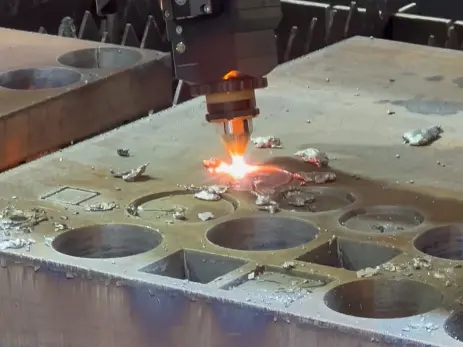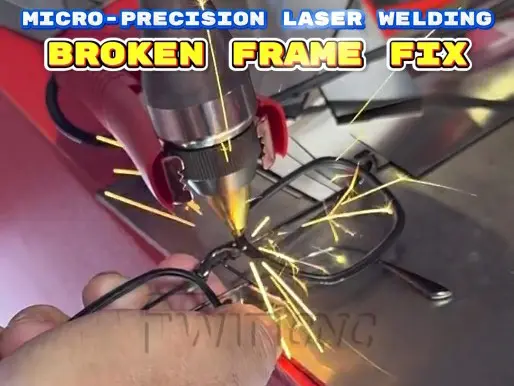
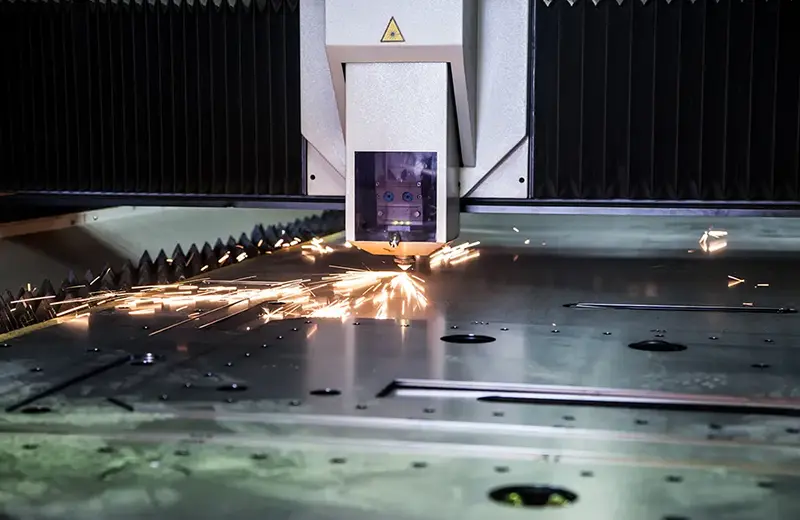
When your industrial fiber laser is operating at peak performance, the cutting zone produces a steady, downward stream of bright, uniform sparks beneath the metal sheet. However, if you notice your laser cutting machine sparking upward, shooting erratic sideways bursts, or sputtering mid-cut, it is a direct warning sign of technical malfunction. At Jinan Allwin CNC Machinery Co., Ltd. (Fwincnc), helping fabricators diagnose abnormal laser cutting machine sparking patterns is a vital part of our technical support workflow to prevent expensive lens damage and costly material waste.
1. Why Normal Downward Sparks Turn Into Upward Sparking
A properly configured fiber laser cutter relies on high-density light energy and a coaxial blast of assist gas to push 100 percent of the molten metal straight down through the kerf slot. If your laser cutting machine sparking shifts from a smooth downward flow to a violent upward spray against the nozzle tip, it usually indicates a failure to achieve full penetration.
When the laser beam cannot fully pierce the metal sheet, the high-pressure assist gas (such as Oxygen or Nitrogen) has nowhere to escape. The gas hits the solid bottom layer of the uncut slot and bounces back up, dragging white-hot molten steel slag along with it. This upward slag instantly blankets your copper nozzle and can burn a black spot onto your laser protective window, causing your cutting head optics to overheat.
2. Primary Causes of Irregular Laser Cutting Machine Sparking
If you are experiencing abnormal laser cutting machine sparking patterns on your factory floor, the root cause can typically be isolated to one of these three technical variables:
Improper Focal Position Alignment
Every material type and thickness requires the laser beam’s focal point to be locked at a specific millimeter depth. For example, when cutting thick carbon steel with Oxygen, the focus must be positioned slightly above or at the plate surface. If your autofocus cutting head experiences alignment drift, the focal spot moves too deep or too high. This immediately drops the localized power density, causing the machine to lose its piercing capability and trigger heavy upward laser cutting machine sparking.
Assist Gas Pressure Drops or Purity Issues
Assist gas serves as the mechanical force that sweeps the molten puddle away. If your shop air line or gas regulator suffers a sudden pressure drop below the recommended barometric threshold, the gas cannot clear the heavy slag. Furthermore, if you are using low-purity Oxygen (less than 99.5 percent purity), the exothermic burning reaction slows down, causing the torch to drag and spit sparks sideways instead of blowing them cleanly out the bottom.
Nozzle Orifice Deformation and Off-Center Aligments
The assist gas must flow in a perfectly symmetrical ring directly around the laser beam. If your copper nozzle hits a tipped-up part or gathers a layer of melted slag, its central orifice becomes ovalized. This deforms the gas column, pushing the laser arc off-center. The unbalanced gas jet fails to clear one side of the cut path, causing erratic sideways laser cutting machine sparking and leaving heavy dross on the finished edge.
3. Systematic Troubleshooting Guide for Abnormal Sparking
To safely resolve an irregular laser cutting machine sparking issue on your Fwincnc Gantry or Desktop system, execute the following mechanical verification sequence:
Spark Pattern Diagnostic Matrix for Daily Operations
| Visible Spark Pattern | Likely Technical Malfunction | Recommended Corrective Action |
| Sparks spraying straight up into the air | The laser beam has failed to cut completely through the metal sheet | Reduce travel speed or check if the laser power setting matches the sheet thickness. |
| Sparks shooting sideways or unevenly | The assist gas stream is distorted due to a damaged copper nozzle tip | Clean the nozzle with a soft wire brush or replace it with a new, round nozzle. |
| Sputtering, intermittent spark stream | Trace moisture or oil mist is leaking into your compressed air lines | Drain your compressor tanks and verify that your multi-stage air dryers are functioning. |
| Sparks stopping completely mid-cut | The laser focus has drifted due to a contaminated internal lens | Stop the program immediately and replace the burned laser protective window glass. |
By training your manufacturing staff to read their laser cutting machine sparking patterns, you can catch minor gas and optical deviations before they turn into major equipment breakdowns, ensuring your Fwincnc fiber laser maintains a flawless, high-speed output year after year.