In precision manufacturing, historical artifact restoration, aerospace maintenance, and high-end automotive repair, production managers frequently ask: what can a pulse laser cleaning machine do to eliminate chemical solvents, grit blasting, and abrasive grinding? Traditional mechanical cleaning methods often scratch delicate metallic substrates, leave embedded abrasive media, or create severe environmental waste streams. By delivering high-energy, short-duration nanosecond laser pulses, a Pulse Laser Cleaning Machine removes oxide layers, oil, paint, and contaminants via thermal photoablation without melting or damaging the underlying metal. At Jinan Allwin CNC Machinery Co., Ltd. (Fwincnc), our pulsed laser cleaners are engineered for non-contact, consumable-free surface preparation across precision components.
1. How a Pulse Laser Cleaning Machine Works Without Substrate Damage
Understanding what a pulse laser cleaning machine can do begins with examining how pulsed optical beam pulses interact with surface contaminants versus continuous-wave laser systems.
Photoablation Mechanics and Energy Control
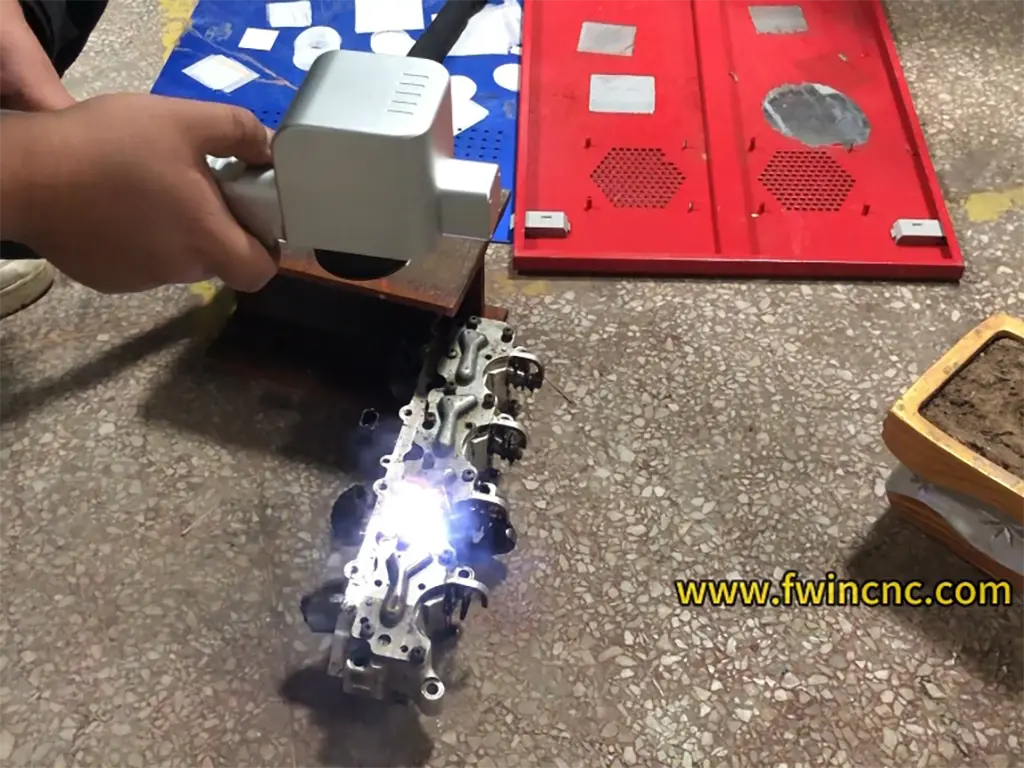
A Pulse Laser Cleaning Machine fires concentrated bursts of light energy in fractions of a microsecond. The surface contaminant (such as rust, oil, or epoxy) absorbs the high peak optical energy instantly, undergoing rapid thermal expansion and vaporizing. Because the metal substrate beneath reflects much of the laser beam and dissipates heat rapidly, the total thermal accumulation remains extremely low.
Pulsed Laser vs. Continuous Wave (CW) Laser Cleaning
| Performance Parameter | Pulse Laser Cleaning Machine | Continuous Wave (CW) Laser Cleaner |
| Substrate Impact | Zero micro-melting or mechanical distortion | High thermal heat input; slight surface oxidation |
| Primary Cleaning Action | High peak power acoustic shock & vaporization | Continuous high-temperature thermal burning |
| Best Substrate Applications | Precision injection molds, aluminum, aircraft alloy, artwork | Heavy steel plate rust, structural beams, thick shipyard scale |
| Operating Thermal Input | Minimal heat-affected zone (HAZ) | Higher continuous thermal input into base metal |
2. Key Applications for Industrial Surface Preparation
Evaluating what a pulse laser cleaning machine do across modern factory floors highlights critical non-destructive applications:
-
Injection Mold Cleaning: Removes residue, rubber vulcanization layers, and release agents from intricate plastic and tire molds without rounding fine tool edges.
-
Aircraft and Vehicle Paint Stripping: Selectively strips paint layers down to primer or raw alloy on thin aircraft aluminum skins without warping structural panels.
-
Pre-Weld and Post-Weld Preparation: Strips mill scale, oil, and oxide layers prior to automated laser welding, ensuring zero porosity in finished weld joints.
3. Operational Workflow: Operating a Handheld Pulsed Unit
To achieve high-efficiency cleaning results using a Pulse Laser Cleaning Machine, operators execute the following setup sequence:
4. Why Fabricators Choose Fwincnc Pulsed Fiber Technology
Integrating a dedicated Pulse Laser Cleaning Machine from Fwincnc provides substantial long-term benefits:
-
Zero Chemical Consumables: Eliminates solvent disposal fees, hazardous air pollutants, and worker exposure to toxic chemical strippers.
-
Substrate Integrity Retention: Preserves the original surface roughness (Ra value) and exact dimensional tolerances of costly machined components.
-
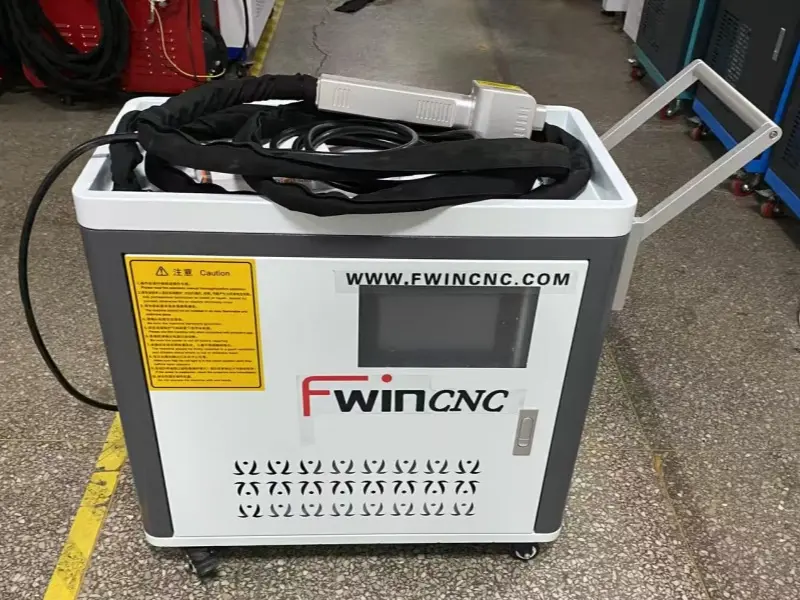
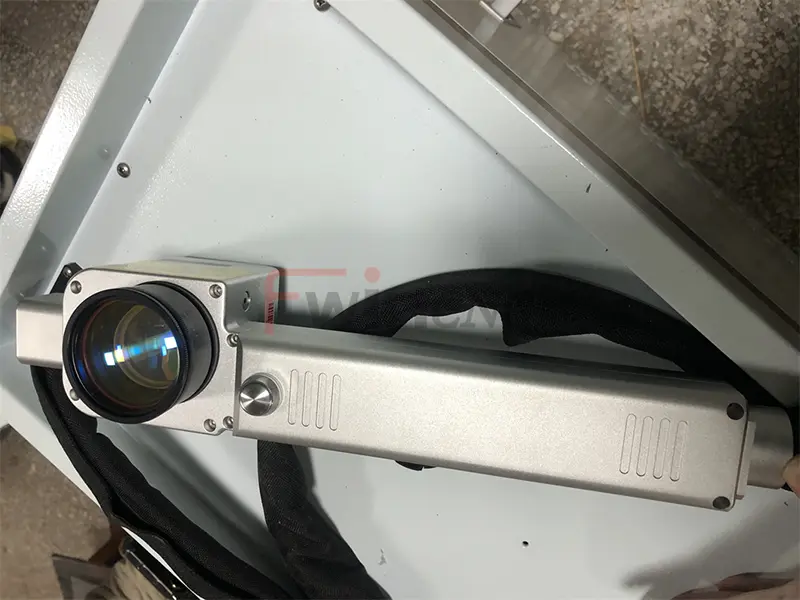
Flexible Ergonomic Operation: Available in portable luggage-style, backpack, or mini cabinet configurations equipped with long fiber optic delivery cables for flexible field maintenance.
By selecting Fwincnc surface restoration systems, industrial users gain reliable cleaning control, lower operating costs, and sustainable eco-friendly output shift after shift.